Geometry Games
Geometry games involve manipulating shapes and lines within a defined environment to achieve specific objectives. These games typically feature controls that allow players to place, rotate, or connect geometric figures to form patterns or solve puzzles.

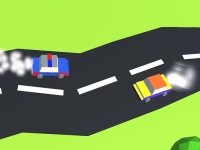
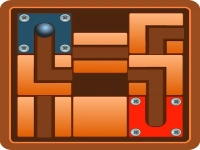



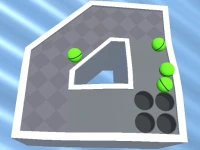


The genre emphasizes precision and spatial reasoning, making geometry puzzle games a common example for players seeking mental challenges based on shape arrangement and alignment.
Entry Guide: Geometry games
Players must arrange shapes accurately to complete puzzle objectives while maintaining alignment and positioning clarity; geometry games focus on spatial understanding and shape manipulation.
System Mechanics
Players interact with shapes by placing and rotating them to fit within designated areas which involves precise control over positioning. Standard mechanics include snapping shapes together and adjusting angles to align with other objects or grid points. Geometry puzzle games often feature environments with grids or outlines to guide placement and ensure accuracy. The core mechanics revolve around matching shapes and maintaining spatial relationships to solve puzzles efficiently.
Optimization Rules
Maintain accuracy when placing shapes to reduce errors and improve puzzle completion times. Focus on aligning shapes precisely to avoid unnecessary adjustments which can hinder progress. Correct placement of shapes enhances overall puzzle-solving efficiency and minimizes mistakes. Applying these principles ensures consistent success in geometry game challenges and promotes higher performance.
Core Inquiries
Q: How do controls work in these games? A: Players manipulate shapes by placing and rotating them within the environment.
Q: What is the main objective? A: Complete shape arrangements to match patterns or solve spatial puzzles.
Q: What is the core mechanic? A: Matching, placing, and aligning geometric shapes to solve puzzles.